How CMMS Software Simplifies Asset Management

Managing physical assets across multiple sites can quickly become complex when organizations rely on spreadsheets, paper records, emails, and disconnected systems. CMMS software simplifies asset management by bringing asset information, maintenance schedules, work orders, inspections, and service history into one centralized platform.
For organizations managing facilities, schools, aged care environments, retirement villages, commercial properties, or multiple operational sites, a modern Computerized Maintenance Management System (CMMS) can provide greater visibility and control over the entire asset lifecycle.
Asset Konnect is a SaaS-based maintenance and asset management platform designed to help organizations manage assets, maintenance activities, contractors, compliance requirements, and operational workflows from a centralized system.
Why Is Asset Management Difficult Without CMMS?
Traditional asset management processes often depend on spreadsheets and manual communication. While these methods may work for a small number of assets, they become increasingly difficult to manage as an organization grows.
Common challenges include:
Scattered asset information
Missed preventive maintenance tasks
Limited visibility into asset condition
Difficulty tracking maintenance history
Delayed work order management
Manual compliance documentation
Poor contractor visibility
Inconsistent reporting across locations
Difficulty identifying recurring maintenance issues
These challenges can increase administrative workload while making it harder for maintenance teams to make informed decisions.
A CMMS creates a structured digital environment where asset and maintenance information can be accessed and managed more efficiently.
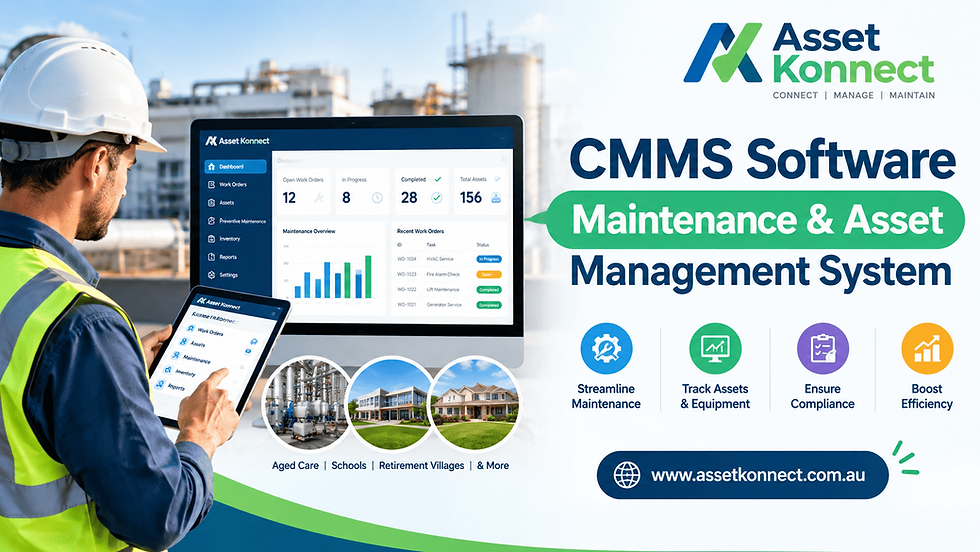
How CMMS Software Simplifies Asset Management
1. Centralized Asset Information
One of the biggest advantages of CMMS technology is centralized asset data.
Instead of maintaining separate spreadsheets or documents, teams can maintain digital asset records containing information such as:
Asset name and identification
Asset location
Asset category
Manufacturer and model
Installation information
Maintenance history
Inspection records
Service schedules
Associated documents
Current status
With Asset Konnect, organizations can establish a more organized asset register and connect maintenance activities directly to the assets they relate to.
2. Better Preventive Maintenance Planning
Reactive maintenance can result in unexpected equipment failures, operational disruption, and higher maintenance costs.
CMMS software supports preventive maintenance management by allowing teams to schedule recurring inspections, servicing, and maintenance activities.
Maintenance managers can create maintenance schedules based on factors such as:
Time intervals
Service requirements
Asset condition
Inspection frequency
Operational requirements
Automated maintenance workflows help teams stay ahead of scheduled tasks instead of relying entirely on memory or manual calendars.
3. Streamlined Work Order Management
Work orders are central to effective maintenance operations.
A CMMS can help teams create, assign, prioritize, track, and close maintenance requests through a structured workflow.
Instead of managing requests through emails or phone calls, maintenance teams can use a digital system to track:
Request → Assignment → Work → Documentation → Completion
This improves accountability because teams can see who is responsible for a task, its current status, priority, and completion details.
4. Complete Maintenance History
Understanding an asset's maintenance history can help organizations identify recurring problems and make better maintenance decisions.
A CMMS can connect completed work orders, inspections, repairs, and service records to individual assets.
This creates a historical maintenance record that can help answer important questions:
How often does this asset require repairs?
What maintenance has already been completed?
Which components frequently fail?
What recurring issues need attention?
Is the asset becoming expensive to maintain?
This information can support more informed asset lifecycle management.
5. Improved Asset Lifecycle Management
Asset management is not simply about knowing where equipment is located. It involves managing assets throughout their operational lifecycle.
A CMMS can help organizations track assets from acquisition and installation through maintenance, repair, replacement, and retirement.
By combining asset data with maintenance records, organizations can better understand asset performance and maintenance requirements.
This can support long-term decisions around asset replacement planning, lifecycle management, maintenance budgeting, and operational efficiency.
CMMS Software Simplifies Asset Management Through Automation
Manual maintenance administration consumes valuable time. Teams may spend hours updating spreadsheets, following up on tasks, searching for historical records, or preparing reports.
CMMS automation can reduce repetitive administrative work.
Depending on the platform and configuration, organizations can automate workflows such as:
Preventive maintenance scheduling
Maintenance reminders
Work order assignments
Inspection workflows
Task escalation
Contractor activities
Maintenance notifications
Reporting processes
Asset Konnect's SaaS approach provides organizations with a centralized environment for managing maintenance and asset-related workflows without relying on disconnected systems.
Better Contractor and Maintenance Management
Many organizations work with external contractors for specialized maintenance services.
Managing contractor activities manually can create challenges around task assignment, communication, documentation, and completion tracking.
A maintenance management platform can provide greater visibility into contractor work by connecting maintenance requests and work orders with the relevant assets, locations, and service activities.
This creates a more structured workflow for organizations that use a combination of internal maintenance teams and external service providers.
Supporting Compliance and Audit Readiness
For sectors where inspections, maintenance documentation, and compliance activities are important, maintaining accurate records is essential.
A CMMS can help centralize:
Inspection records
Maintenance documentation
Service history
Work orders
Asset information
Compliance-related tasks
Contractor records
Instead of searching through paper files and multiple spreadsheets, teams can access relevant information from a centralized digital system.
For organizations managing aged care facilities, schools, retirement villages, commercial properties, and facilities, structured maintenance records can make operational oversight easier.
Real-Time Maintenance Reporting
Data becomes significantly more useful when it can be converted into actionable information.
CMMS reporting can provide visibility into metrics such as:
Open and completed work orders
Preventive maintenance completion
Asset maintenance history
Outstanding maintenance tasks
Recurring maintenance issues
Contractor activity
Maintenance performance
Asset-related costs
These insights can help maintenance and facilities teams identify trends and prioritize operational improvements.
Why Choose Asset Konnect for Asset and Maintenance Management?
Asset Konnect takes a SaaS-focused approach to asset and maintenance management by bringing key operational workflows together in one platform.
Instead of using separate tools for asset registers, maintenance requests, work orders, contractor coordination, and reporting, organizations can create a more connected maintenance environment.
Key capabilities can include:
Asset management
Maintenance management
Preventive maintenance
Work order management
Contractor management
Compliance tracking
Asset registers
Maintenance reporting
Multi-site maintenance workflows
Digital maintenance records
For growing organizations, this centralized approach can make it easier to standardize maintenance processes across teams and locations.
The Business Value of Moving From Spreadsheets to CMMS
Moving from spreadsheets to dedicated maintenance software is not simply a technology upgrade. It can change how maintenance teams organize and manage operational information.
A centralized CMMS can help organizations:
Reduce manual administration: Digitize repetitive maintenance workflows.
Improve visibility: Access asset and maintenance information from a centralized platform.
Support preventive maintenance: Schedule recurring maintenance activities more systematically.
Improve accountability: Assign and track work orders through defined workflows.
Strengthen reporting: Turn maintenance data into useful operational insights.
Support scalability: Manage growing numbers of assets, locations, and maintenance activities within a structured system.
Final Thoughts
Effective asset management requires more than maintaining a list of equipment. Organizations need visibility into asset condition, maintenance history, scheduled activities, work orders, contractors, and operational performance.
CMMS software simplifies asset management by connecting these activities within a centralized digital platform.
For organizations looking to modernize maintenance operations, Asset Konnect provides a SaaS-based approach to asset management, maintenance workflows, contractor coordination, compliance tracking, and reporting.
By replacing disconnected spreadsheets and manual processes with structured digital workflows, organizations can create a more organized foundation for managing assets throughout their lifecycle.
Frequently Asked Questions
What is CMMS software?
CMMS stands for Computerized Maintenance Management System. It is software designed to help organizations manage assets, maintenance activities, work orders, inspections, preventive maintenance, and related operational records.
How does CMMS simplify asset management?
CMMS simplifies asset management by centralizing asset records, maintenance history, work orders, preventive maintenance schedules, inspections, and reporting within a single digital platform.
Can CMMS software replace spreadsheets?
A CMMS can reduce an organization's reliance on spreadsheets for asset and maintenance management by providing structured workflows, centralized records, automated scheduling, and reporting capabilities.
What is preventive maintenance in CMMS?
Preventive maintenance involves scheduling inspections, servicing, and maintenance activities before equipment failures occur. CMMS platforms help organize and track these recurring maintenance tasks.
Is CMMS suitable for multiple locations?
Yes. CMMS platforms can support organizations managing assets and maintenance activities across multiple buildings, facilities, campuses, or operational locations, depending on the platform's capabilities.
Can CMMS help with contractor management?
CMMS solutions can help organizations structure contractor-related maintenance activities by connecting contractors with work orders, assets, locations, service tasks, and completion records.
What types of organizations can use Asset Konnect?
Asset Konnect can be relevant to organizations that need structured asset and maintenance workflows, including facilities, schools, aged care environments, retirement villages, commercial properties, and other multi-site operations.
Comments